API Fishcare South Africa, homeShop online

Test Kits

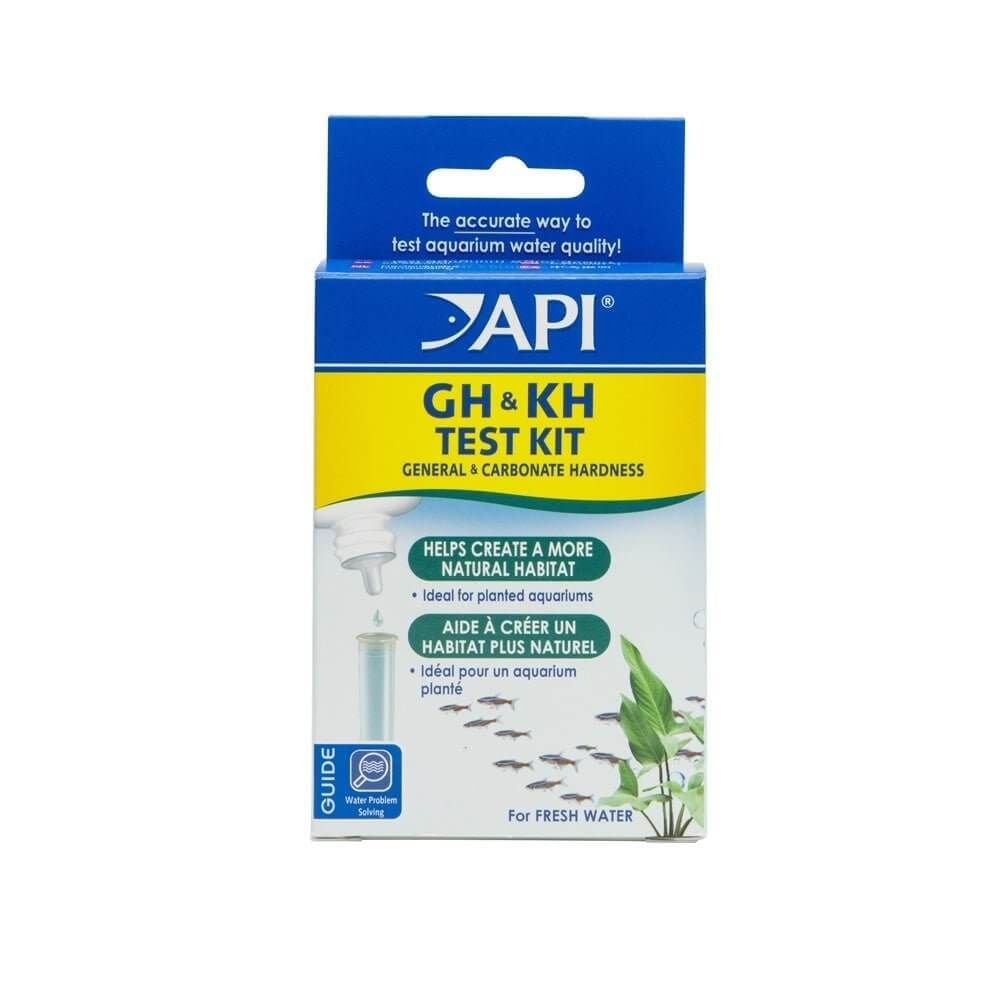
API GH & KH Test Kit

Liquid testFreshwaterPlant safe

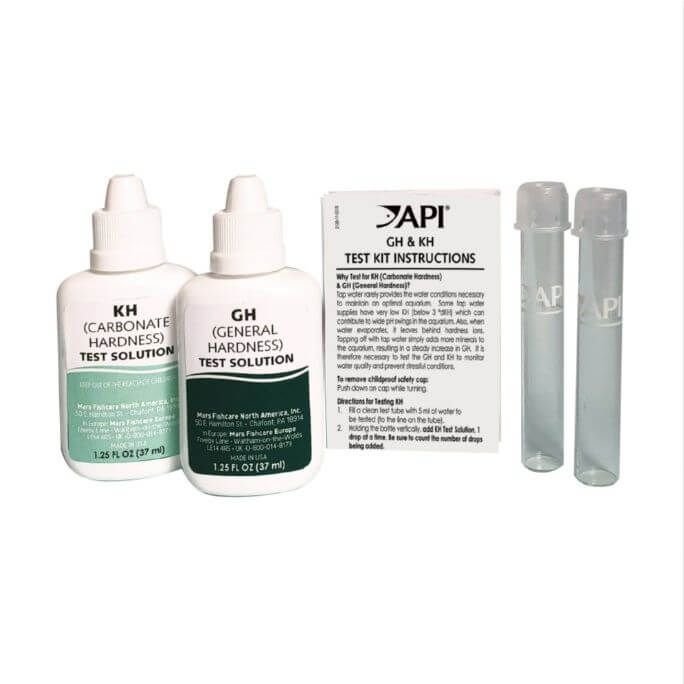
The API GH & KH Test Kit measures the two kinds of hardness in freshwater. General hardness is the calcium and magnesium dissolved in the water, and it should match where your fish and plants come from — soft for Amazon species and many shrimp, hard for livebearers and Rift Lake cichlids. Carbonate hardness is the bicarbonate that holds pH steady; when it runs low the pH can crash overnight. Each test is a drop-count titration: add reagent a drop at a time until the colour changes, and the number of drops is the reading. The kit contains two reagent bottles, glass test tubes and instructions.

Live pricing and stock on jungleaquatics.com — purchase through Jungle Aquatics, with delivery across South Africa.
Technical details

Test typeLiquid reagent (drop-count titration)
ParametersGeneral hardness (GH), carbonate hardness (KH)
Suitable forFreshwater aquariums, fish and plants
In the box2 reagent bottles, glass test tubes, instructions
Time per testA few minutes per parameter
Made byMars Fishcare, USA

What GH and KH do my fish need?

As a rule of thumb, soft-water species — discus, most tetras and rasboras, Caridina shrimp — do best at a GH of roughly 3 – 8 dGH; general community fish at 6 – 12 dGH; livebearers, goldfish and Central American cichlids at 10 – 20 dGH; and African Rift Lake cichlids higher still. For KH, keep at least 3 – 4 dKH in any tank so the pH cannot crash, with 8 dKH or more for cichlid and marine-style hard water. Johannesburg tap water is typically moderately hard; if you need softer water, the API Water Softener Pillow lowers GH, and if KH keeps falling a Proper pH buffer restores it.

GH: does the water suit the fish?

Calcium and magnesium concentration is what “soft” and “hard” water actually mean. Neon tetras, discus and Caridina shrimp come from soft water; guppies, mollies and mbuna from hard. Matching GH to the species prevents the chronic stress that shows up as poor colour, failed breeding and short lives.

KH: will the pH hold?

Carbonate hardness is the buffer that stops pH falling as a tank produces acid. A tank with very low KH can drop a full pH point overnight, which is far more dangerous to fish than the absolute value. Testing KH weekly in soft-water tanks and after large water changes catches a crash before it happens.

Count the drops

Both tests work by titration: fill the tube, add one drop, cap and invert, and repeat until the colour changes. The number of drops equals the degrees of hardness. It takes a little longer than a colour-match test, but the result is a number rather than a shade, and it is the method professionals use.

Frequently asked questions

What is the difference between GH and KH?

GH is general hardness, the calcium and magnesium in the water, which fish and plants feel directly. KH is carbonate hardness, the bicarbonate that buffers pH; low KH means an unstable pH.

Does the kit work in saltwater?

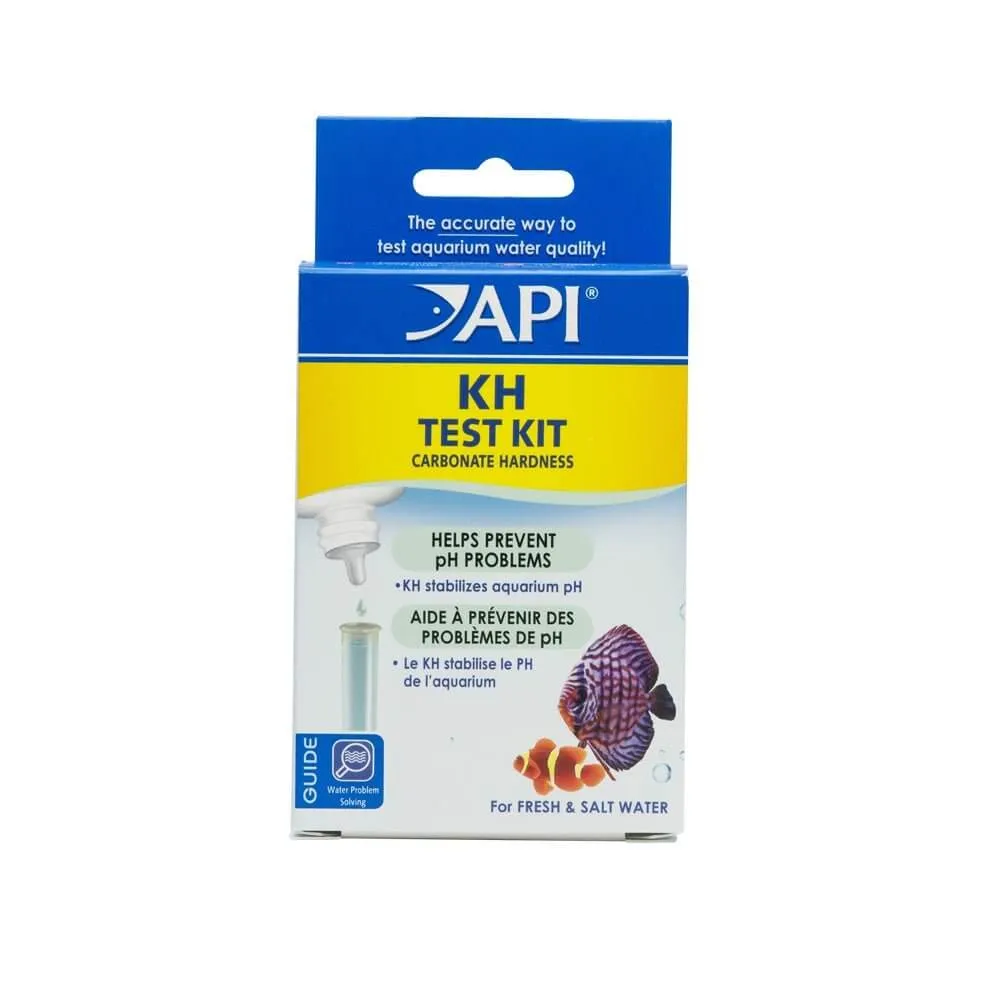
It is designed for freshwater fish and plants. For marine carbonate hardness use the API KH Test Kit, which is labelled for fresh and salt water.

How do I lower GH for soft-water fish?

Dilute with rainwater or RO water, or run the API Water Softener Pillow in the filter, and test GH as you go so you lower it gradually.

Why did my KH reading jump after using Proper pH?

The phosphate-based Proper pH buffers resist acid the way carbonate does, so a KH test reports them as carbonate hardness. The reading reflects real buffering capacity.

Is the API GH & KH Test Kit available in South Africa?

Yes — Jungle Aquatics in Fourways, Johannesburg stocks it and delivers nationwide; live pricing and stock are on jungleaquatics.com.

South African flagAvailable in South Africa

Stocked & supported by Jungle Aquatics

South Africa's leading pet and aquarium store since 2007 — with the API range on the floor in Fourways, advice from people who test water every day, and easy ordering from anywhere in the country.