API Fishcare South Africa, homeShop online

Test Kits

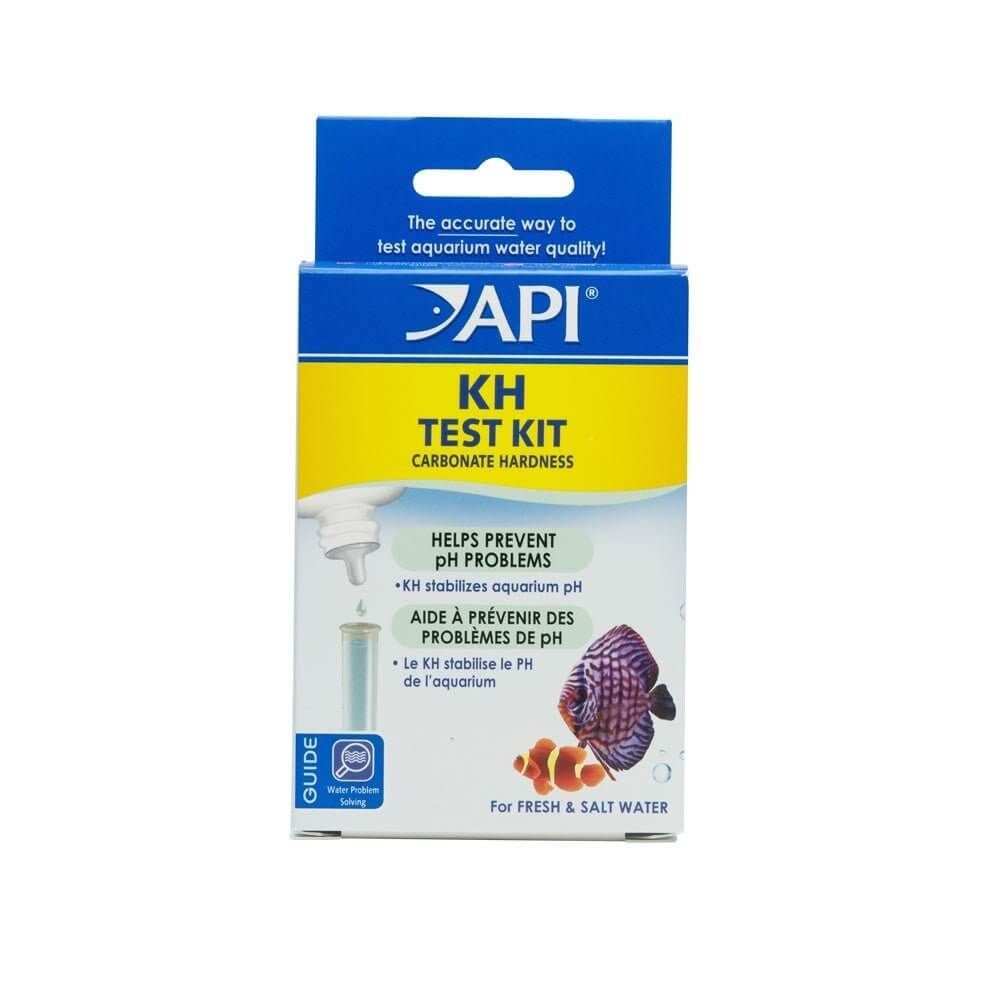
API KH Test Kit

Liquid testFreshwater & marine

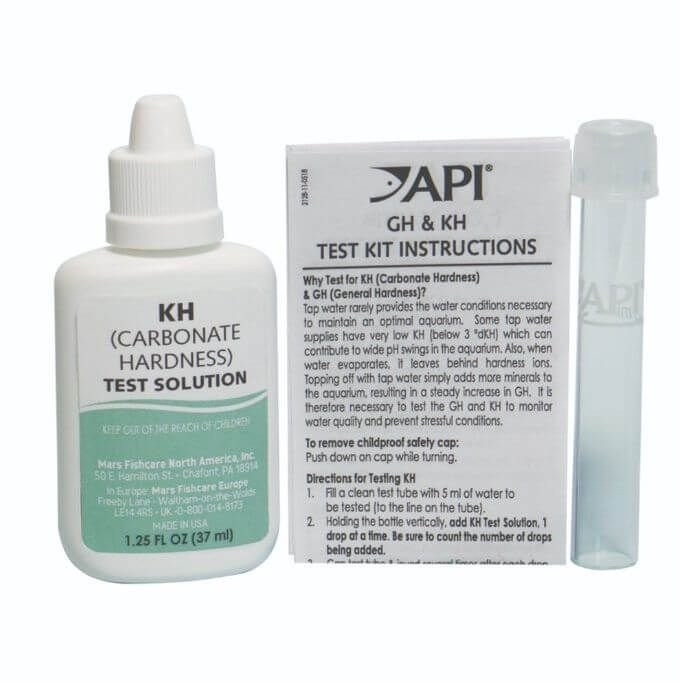
The API KH Test Kit measures carbonate hardness — the dissolved bicarbonate and carbonate that keep pH from swinging — in freshwater and saltwater aquariums. It is a drop-count titration: one drop of reagent at a time until the sample changes colour, with the drop count as the result. Use it to find out why a pH keeps falling, to work out how much buffer a tank needs, and in marine systems to keep alkalinity in the range corals demand. The kit contains one reagent bottle, a glass test tube and a colour chart.

Live pricing and stock on jungleaquatics.com — purchase through Jungle Aquatics, with delivery across South Africa.
Technical details

Test typeLiquid reagent (drop-count titration)
ParametersCarbonate hardness (KH / alkalinity)
Suitable forFreshwater and saltwater aquariums
In the box1 reagent bottle, glass test tube, colour chart, instructions
How oftenWeekly, and whenever pH starts to drift
Made byMars Fishcare, USA

My pH keeps dropping — is KH the reason?

Almost certainly. Fish waste and the filter produce acid all the time, and carbonate hardness is what neutralises it; when KH falls below about 3 dKH there is nothing left to hold the pH up and it slides, sometimes a whole point overnight. Test KH: if it reads 0 – 2 dKH, raise it gradually with a buffer — Proper pH in a fish-only freshwater tank, a marine alkalinity supplement in a reef — and retest. Regular water changes with tap water of decent KH usually keep it up on their own; a tank that needs buffering constantly is either overstocked or running on very soft source water. Reef tanks are normally held at 7 – 11 dKH.

The number behind pH

pH problems are usually KH problems in disguise. Acids produced by fish waste and respiration eat carbonate hardness; once it is gone the pH drops fast. Testing KH tells you how much buffer is left and, read alongside pH, whether to add some or leave well alone.

Dose buffers by the number

Proper pH powders and marine alkalinity supplements are dosed to a target KH. Measuring before and after a dose lets you set the level precisely rather than guessing from the pH, and prevents the over-buffering that makes water cloudy.

Fresh or salt

The same test reads freshwater and marine water. Reef keepers use it weekly, because stony corals consume carbonate as they grow and alkalinity is the parameter that moves fastest in a reef.

Frequently asked questions

What KH should my aquarium have?

At least 3 – 4 dKH in any freshwater tank so the pH is stable; 8 dKH or more for African cichlids and hard-water fish; around 7 – 11 dKH in a reef aquarium.

Does the KH Test Kit work in marine tanks?

Yes. It is labelled for fresh and salt water, and alkalinity is one of the most important weekly tests in a reef.

How is KH different from GH?

KH is carbonate hardness, the pH buffer. GH is general hardness from calcium and magnesium. The API GH & KH kit tests both for freshwater; this kit tests KH alone for fresh or salt water.

Is the API KH Test Kit available in South Africa?

Yes — Jungle Aquatics in Fourways, Johannesburg stocks it and delivers nationwide; live pricing and stock are on jungleaquatics.com.

South African flagAvailable in South Africa

Stocked & supported by Jungle Aquatics

South Africa's leading pet and aquarium store since 2007 — with the API range on the floor in Fourways, advice from people who test water every day, and easy ordering from anywhere in the country.